
Braid Loc Sizing Chart: Why Size Matters Right Now
A braid loc sizing chart can make choosing loc extensions much easier, especially when product names such as small, medium, and large do not always mean the same thing. Current loc and braiding services show that salons use several size levels, including medium-large, medium, medium-small, small, and extra-small. This means shoppers should compare actual thickness and installation method instead of relying on a size name alone.
The braid loc sizing chart affects the final look, styling options, installation time, and maintenance. Smaller locs usually create a more detailed appearance, while larger locs give a fuller and bolder finish. Extension guides also point out that size can affect versatility and upkeep, making the choice more than a simple style decision.
Because there is no single industry-wide sizing standard, the safest approach is to use a chart as a starting point and then compare the actual loc diameter with your natural hair and desired look. A professional loctician or braider can also help you select a size that works with your hair density and installation method.
The Braid Loc Sizing Chart at a Glance
The chart below gives a practical guide rather than a universal measurement standard. Exact dimensions can vary between manufacturers, stylists, and loc-making methods.
| Loc Size | Approximate Look | Best For | Main Feature |
|---|---|---|---|
| Micro | Very thin | Detailed styles | Maximum styling flexibility |
| Small | Thin | Lightweight loc looks | Detailed and neat appearance |
| Medium-Small | Between small and medium | Balanced styles | Good mix of detail and fullness |
| Medium | Moderate thickness | Everyday loc styles | Balanced maintenance and volume |
| Medium-Large | Fuller than medium | Bold but flexible looks | More volume with fewer locs |
| Large | Thick | Statement styles | Fuller appearance and faster installation |
| Jumbo | Very thick | Bold protective styles | Dramatic size and strong visual impact |
These categories should not be treated as exact measurements. For example, one current braiding service lists medium-large as a size between large and medium, while a professional loc service separately identifies medium-large, medium, and medium-small grid sizes.
What Does Micro Size Really Mean?
Micro locs are the smallest option in most sizing systems. They are designed for people who want many fine locs with a detailed appearance. Their smaller width can make it easier to create intricate styles, but the installation process generally requires more individual sections.
A smaller loc size can also change the overall visual balance of the hairstyle. Instead of a few bold strands, the head contains many thinner locs. This can create movement and allow more styling combinations, although the exact result depends on hair density and the number of sections used.
It is important not to choose micro sizing simply because it looks attractive in a photo. Your natural hair thickness, sectioning pattern, and maintenance routine all matter. A professional should check whether your hair can comfortably support the selected size before installation.
Small Locs Offer Detail Without Going Fully Micro
Small braid locs sit between micro locs and medium locs. They can give a detailed appearance while still looking more substantial than very fine locs. This makes them a common choice for people who want a neat style without going to the smallest possible size.
Small sizing can also work well when you want several styling choices. However, more locs usually mean more individual sections to manage. Current braiding menus demonstrate how small styles can take considerably longer than larger styles, particularly when long lengths are selected.
For anyone comparing extension products, look beyond the word “small.” Check the product’s actual dimensions, number of pieces, and intended installation method. Two products can both be labeled small while producing noticeably different results.
Medium Is the Middle Ground Most People Understand
Medium locs are often a practical middle option because they balance size, fullness, and styling flexibility. They are large enough to create visible loc definition but not so large that the hairstyle loses all of its detail.
Current professional loc services also divide their grids into several levels around the medium range. V-Nus Locs, for example, lists medium-large, medium, and medium-small braid starter loc grids, showing why a simple small-medium-large chart cannot describe every installation.
Medium can be a useful starting point for someone who is unsure about sizing. Still, the best choice depends on your natural hair. Dense hair may support a fuller medium look, while finer hair may need a different section size to achieve the desired result.
Medium-Large and Large Create More Volume
Medium-large braid loc sizing chart are useful when you want more visual weight without moving immediately to very large or jumbo locs. They can create a fuller hairstyle while keeping some styling flexibility.
Large locs make an even stronger statement. They normally involve fewer sections, which can make installation quicker than smaller styles. Current salon menus show large braids and loc-related styles being offered at shorter service times than many small or extra-small options.
Large sizing may also appeal to people who prefer a simple, bold appearance. The trade-off is that very large locs may offer fewer small-scale styling possibilities than smaller locs. Your preferred look should therefore guide the decision rather than the size label alone.
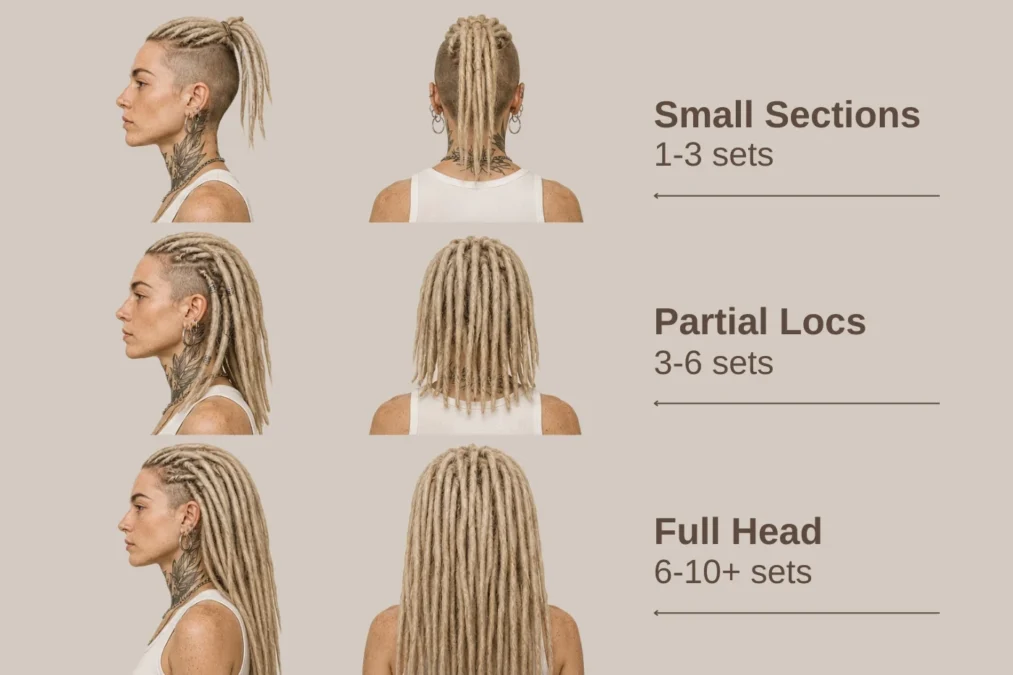
How Many Locs Should You Expect?
There is no single correct loc count for each size. The final number depends on head size, hair density, sectioning method, desired thickness, and whether you are starting natural locs or installing extensions.
This is one reason a professional chart should be viewed as a guide rather than a promise. A person with dense hair may need a different section pattern from someone with fine hair even when both choose the same named size.
If a stylist gives you a target loc count, use it together with the requested size and section dimensions. For example, a current salon service describes medium loc maintenance as roughly 50 to 70 locs, but that figure applies to that particular service rather than every medium installation.
Diameter Is More Useful Than a Size Name
When buying braid loc extensions, diameter can be more reliable than labels such as “small” or “large.” Some loc accessories already use millimeter measurements to describe the opening that needs to fit around a loc. One current loc-bead listing, for example, provides sizes from 4 mm through 15 mm.
This does not mean those bead measurements should automatically become a braid loc sizing standard. Instead, they demonstrate why measurements can be helpful when comparing products.
Before ordering, check whether the seller provides the loc’s width, circumference, strand count, or finished diameter. If only a general size name is provided, contact the seller and ask for measurements before making a large purchase.
Which Braid Loc Size Should You Choose?
Choose micro or small if you want a detailed, lightweight-looking style with many styling possibilities. Choose medium if you want a balanced appearance that sits between fine and bold. Medium-large and large are better choices when fullness and a stronger visual shape are more important.
Your hair density should also influence the decision. A stylist can adjust the sectioning pattern so the finished locs look balanced across the head. The goal is not simply to match a chart but to create a size that works with your hair and your preferred maintenance routine.
Length matters, too. A long extension can make a thick loc feel heavier than a shorter one. That means size and length should be considered together when planning a braid loc installation.
Conclusion
A braid loc sizing chart is a helpful starting point, but it should never replace real measurements, hair assessment, or professional advice. Since loc sizes vary across brands and stylists, the most reliable approach is to focus on actual thickness, hair density, and desired styling outcome rather than relying only on size labels. By combining a sizing chart with proper consultation and product measurements, you can confidently choose a braid loc size that looks balanced, feels comfortable, and suits your long-term maintenance needs.
