
Understanding PAVA system meaning is important for anyone involved in building safety, fire protection, or facility management. A PAVA system is designed to provide clear communication during both normal operations and emergency situations. From shopping malls and hospitals to airports and office buildings, these systems play a vital role in keeping people informed and safe.
Many modern buildings rely on PAVA systems because spoken instructions are often easier to understand than alarm tones alone. This article explains PAVA system meaning, how these systems work, their main components, benefits, applications, and why they have become an essential part of modern safety systems.
What Is PAVA System Meaning?
The PAVA system meaning is Public Address and Voice Alarm System. It combines a traditional public address system with a voice alarm system to create a complete communication solution for buildings.
A public address system is used for everyday announcements, staff paging, and general communication. The voice alarm function is activated during emergencies, such as a fire, to broadcast clear evacuation instructions. Instead of simply hearing a loud alarm, building occupants receive spoken messages telling them exactly what action to take. This improves safety and helps reduce confusion during critical situations.
How a PAVA System Works
To understand PAVA system meaning, it is helpful to know how the system operates. A PAVA system uses microphones, controllers, amplifiers, and loudspeakers connected through a communication network.
During normal operation, staff members can make live announcements or play background music where appropriate. If an emergency occurs, the system automatically receives a signal from the fire alarm panel. It immediately stops any normal audio and broadcasts pre-recorded evacuation messages or allows emergency personnel to make live announcements.
Many systems divide a building into different zones. This allows announcements to be sent only to selected areas, making communication more efficient during emergencies.
| Information | Details |
|---|---|
| Full Term | Public Address and Voice Alarm System (PAVA) |
| Category | Fire Safety & Building Communication |
| Purpose | Public announcements and emergency voice evacuation |
| Common Uses | Offices, Airports, Hospitals, Schools, Hotels, Shopping Malls, Factories |
| Main Components | Control Panel, Microphone, Amplifier, Loudspeakers, Backup Battery |
| Works With | Fire Alarm Systems and Building Management Systems |
| Key Features | Live Announcements, Pre-recorded Messages, Multi-zone Paging, Emergency Override |
| Benefits | Improves Safety, Reduces Panic, Fast Communication, Clear Evacuation Instructions |
| Power Backup | Yes, Battery Backup Available |
| Applicable Standards | EN 54 (Europe), BS 5839-8 (UK), Local Fire Safety Regulations |
| Technology Type | Voice Alarm & Public Address Communication System |
| Primary Users | Building Owners, Facility Managers, Fire Safety Professionals, Security Teams |
| Popularity | Widely Used in Commercial and Public Buildings |
Main Components of a PAVA System
A better understanding of PAVA system meaning includes learning about the equipment that makes the system work effectively.
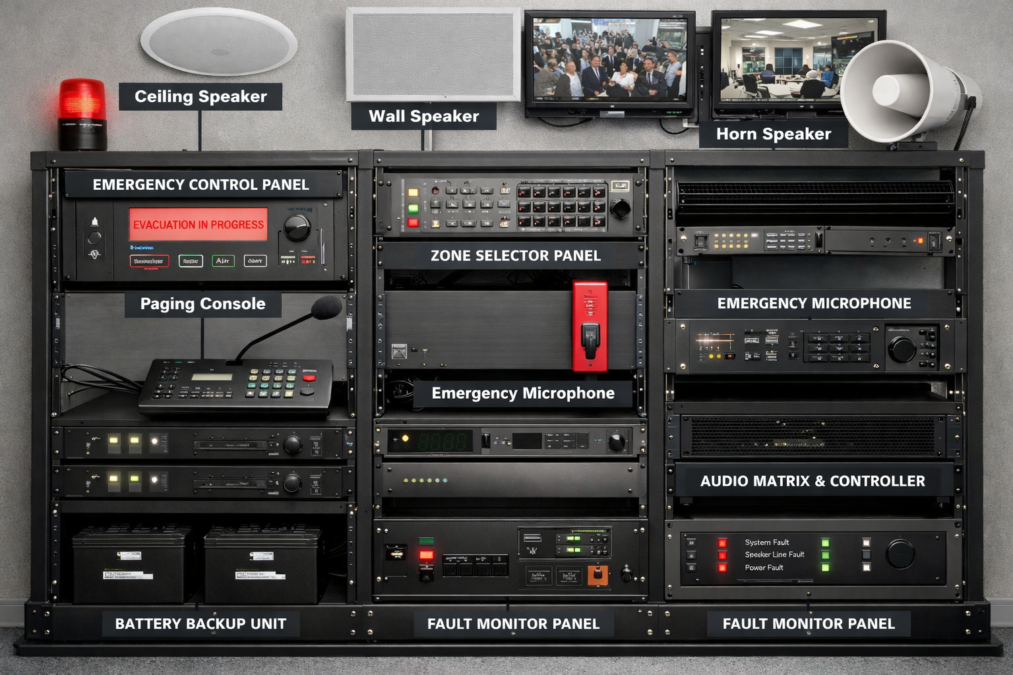
The control panel manages all audio signals and system functions. Paging microphones are placed in security rooms, reception areas, or control centers so authorized staff can communicate throughout the building.
Power amplifiers strengthen the audio signal before it reaches the loudspeakers. Speakers are installed in corridors, offices, stairwells, shopping areas, and public spaces to ensure messages can be heard clearly.
Most systems also include backup batteries, emergency microphones, digital message storage, and monitoring equipment. These components help the system continue operating even during a power failure.
Why PAVA Systems Are Important
The importance of PAVA system meaning becomes clear during emergencies. Traditional alarm bells only warn people that something is wrong, but they do not explain what to do next.
Voice alarm systems provide clear spoken instructions that guide occupants toward safe exits while helping them avoid dangerous areas. This reduces panic and supports a faster, more organized evacuation.
Clear communication is especially valuable in large buildings where thousands of people may need guidance at the same time. Because of this, many commercial and public facilities choose PAVA systems as part of their overall fire safety strategy.
Benefits of Installing a PAVA System
One major advantage of understanding PAVA system meaning is recognizing the practical benefits these systems provide every day.
They improve emergency response by delivering immediate voice instructions. They also support routine communication by allowing management to make announcements, page employees, and share important information with visitors.
Modern systems are highly reliable because they continuously monitor their own performance. If a fault occurs, maintenance teams receive alerts so problems can be corrected quickly.
Another benefit is system flexibility. Different zones can receive different announcements, allowing communication to be targeted without disturbing the entire building.
Where PAVA Systems Are Used
Knowing PAVA system meaning also helps explain why these systems are installed in many different types of buildings.
Airports use them to announce flight information and provide emergency instructions. Railway stations depend on them for passenger announcements and safety guidance.
Hospitals rely on PAVA systems to communicate with staff while protecting patients during emergencies. Schools, universities, hotels, shopping centres, factories, warehouses, sports stadiums, office buildings, and convention centres also benefit from reliable voice communication.
Wherever large groups of people gather, a PAVA system helps improve safety and communication.
PAVA System Compared with a Standard PA System
Many people believe a public address system and a PAVA system are exactly the same, but there are important differences.
A standard PA system is mainly used for announcements and background music. It is designed for everyday communication and may not include emergency safety functions.
Understanding PAVA system meaning shows that a PAVA system goes much further. It automatically overrides normal audio during emergencies and broadcasts certified evacuation messages through strategically placed loudspeakers. This additional capability makes it an important part of many modern life safety systems.
Maintenance and Regular Testing
Proper maintenance is essential for every PAVA installation. Understanding PAVA system meaning also means recognizing that regular inspections help ensure reliable performance.
Technicians routinely test microphones, loudspeakers, amplifiers, batteries, and emergency messages. Automatic monitoring systems can detect faults before they affect operation.
Regular servicing also confirms that the connection between the fire alarm and voice alarm system continues working correctly. This gives building owners confidence that the system will perform as expected during an emergency.
Choosing the Right PAVA System
Selecting the right solution depends on the size, layout, and purpose of the building. When evaluating PAVA system meaning, it is important to consider future expansion as well as current needs.
Smaller offices may require only a basic system with limited zones, while airports, hospitals, universities, and shopping centres often need complex networked installations covering multiple buildings.
Professional system designers assess speaker placement, sound quality, zoning requirements, and emergency procedures before recommending the most suitable solution.
The Future of PAVA Technology
Technology continues to improve voice communication systems every year. As more buildings become digitally connected, the role of PAVA system meaning continues to grow.
Modern systems now include network-based audio distribution, remote monitoring, intelligent fault reporting, and integration with building management systems. Advanced digital processing also improves speech clarity, making announcements easier to understand even in noisy environments.
Future developments are expected to provide even greater reliability, smarter automation, and improved communication during emergency situations.
Conclusion
Understanding PAVA system meaning helps building owners, facility managers, and safety professionals appreciate the value of reliable voice communication. By combining everyday announcements with emergency voice alarms, these systems provide a practical solution for improving both operational efficiency and occupant safety.
Whether installed in a hospital, airport, office, school, hotel, or shopping centre, a properly designed Public Address and Voice Alarm System offers dependable communication when it matters most. As safety standards continue to evolve, PAVA system meaning will remain closely associated with effective emergency communication, better evacuation procedures, and improved protection for people in public and commercial buildings.
